Monorail Systems Around the WorldBy C. AndersonMonorails aren’t just retro-futurist eye candy; they quietly move millions while threading through dense cities and challenging landscapes with a light footprint. In Seattle, the single-mile Seattle Center Monorail has linked the downtown district to Seattle Center since 1962, a legacy of the Century 21 World’s Fair. Its compact guideway slips between buildings and over streets, illustrating how elevated, rubber-tired trains can add capacity without carving up the urban fabric. Germany’s Wuppertal offers a very different—and mesmerizing—take. The Schwebebahn is a suspended monorail: trains hang beneath a steel track that largely follows the River Wupper. In operation since 1901 and spanning approximately 13 kilometers with 20 stops, it serves as both everyday transportation and a kinetic landmark. Its design keeps the structure above water and roads, preserving ground space while providing striking views of the city’s valley. Tokyo's airport link shows the monorail at high cadence in a mega-city. The Tokyo Monorail connects Haneda Airport to central Tokyo with a straddle-beam system descended from the ALWEG concept. Built to interface smoothly with other rail lines, it demonstrates how monorails can be integrated into a broader network and serve as a rapid, frequent trunk between key hubs.
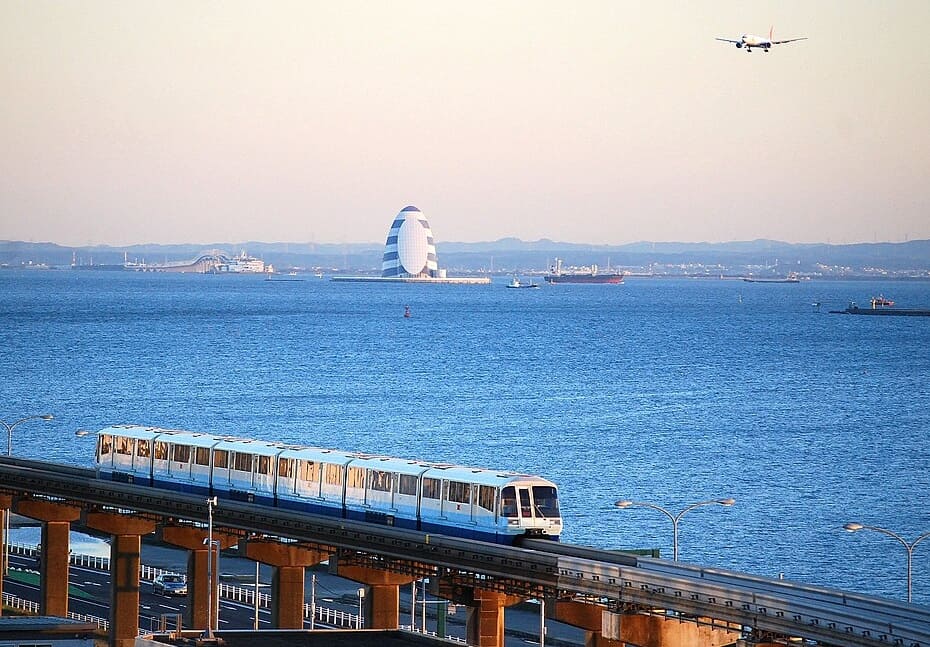 Tokyo Monorail Chongqing’s mountainous topography makes conventional rail alignments tricky; monorails have turned cliffs and river gorges into routine commutes. The city’s system includes long straddle-beam lines that famously thread around high-rises and use technology adapted to steep grades and tight curves. It’s a showcase of how elevated guides can expand rapid transit in places where tunneling or vast viaducts would be prohibitively complex or disruptive. Even in planned districts, monorails can provide clean traffic patterns without the footprint of roads. In Ashgabat, a loop line serves the Olympic complex with an elevated guideway and compact stations, an example of a self-contained people-mover scaled to a large campus. While more specialized than a citywide network, it demonstrates the format’s flexibility for venues and districts that need frequent, short-hop service. Taken together, these systems highlight three enduring strengths... First, small structural footprints: narrow beams and piers make it easier to fit transit into built-up areas or over waterways, as seen in Wuppertal and Seattle. Second, topographic agility: rubber tires and tighter curve radii help lines like Chongqing’s climb and weave where steel-wheel subways struggle. Third, seamless integration: Tokyo’s airport link demonstrates how monorails can seamlessly integrate into busy urban rail ecosystems. None of these networks tries to be everything to everyone; instead, each solves a local problem elegantly — proof that the monorail, far from being a novelty, remains a practical tool in the modern transit kit.
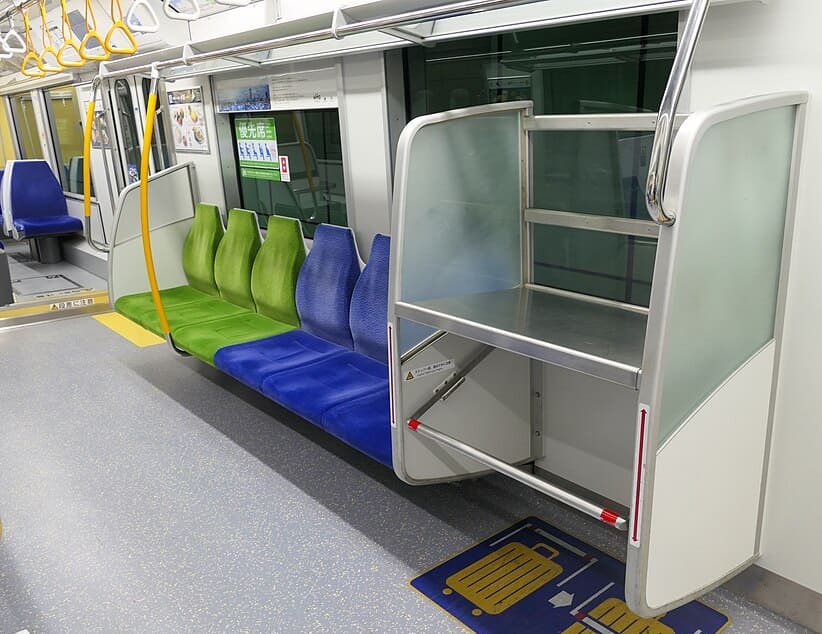 Monorail train interior Brought to you by... Create your own website for under $15! |
MENUHome |